
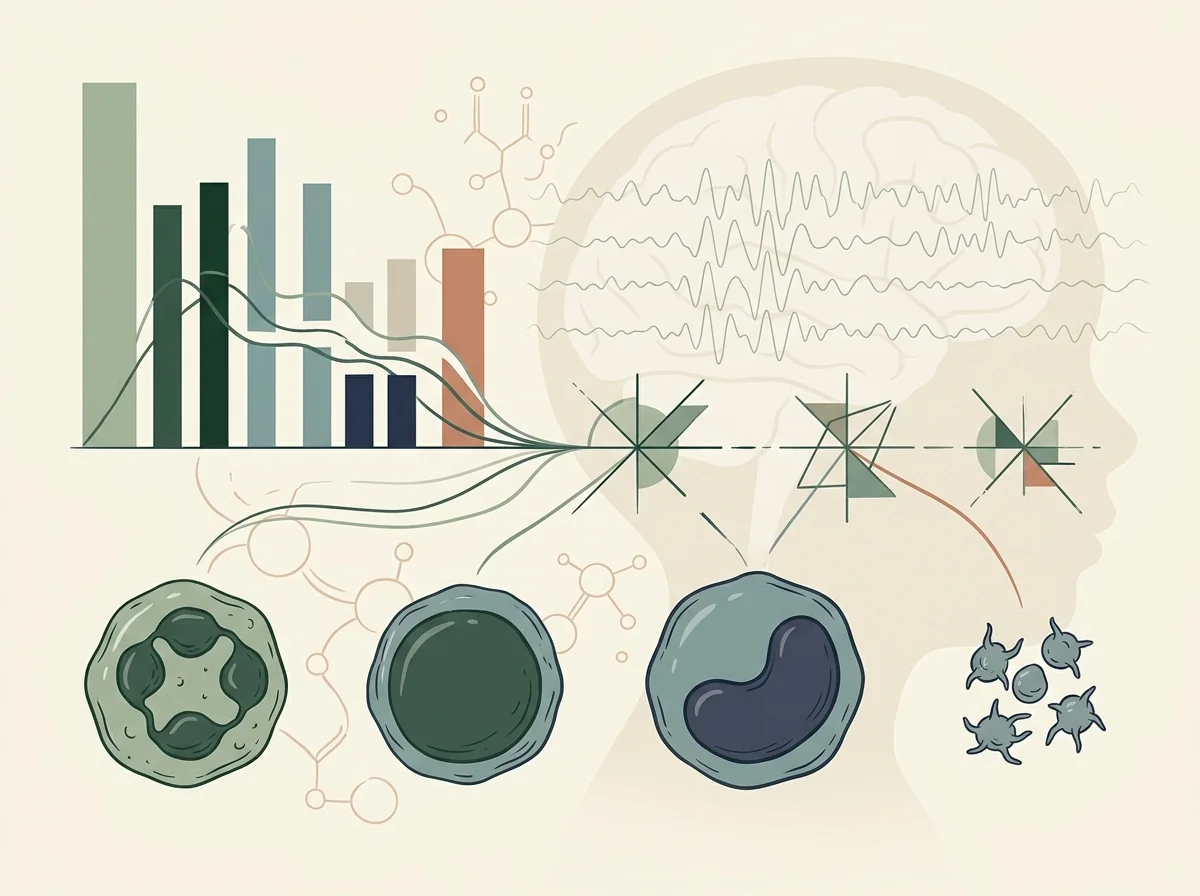
A routine complete blood count reports neutrophil, lymphocyte, monocyte and platelet counts separately. In recent years, researchers have increasingly combined these cell counts into easily calculated indices such as NLR, SII and SIRI.
Their appeal is understandable: they require no additional blood sample, are inexpensive and can be calculated from retrospective clinical data. Yet being easy to calculate does not make them easy to interpret.
When these indices are discussed in children, epilepsy and medical ketogenic-diet research, one distinction must remain clear:
NLR, SII and SIRI are CBC-derived research indicators. By themselves, they do not diagnose inflammation, neuroinflammation, epilepsy or treatment response.
The meaning of a result depends on the child's age, recent infection, the interval between a seizure and blood sampling, medication use, comorbid conditions and the laboratory method.
This article explains what the indices are and how they are calculated, while also showing why a clinical conclusion cannot be drawn from a single number.
The brief answer: what do these three indices represent?
- NLR is the ratio of the neutrophil count to the lymphocyte count.
- SII combines neutrophil and platelet counts in relation to the lymphocyte count.
- SIRI combines neutrophil and monocyte counts in relation to the lymphocyte count.
- None of the three is a newly measured laboratory substance; each is calculated from routine CBC data.
- In group-level research, they may provide information about biological patterns related to systemic inflammation or physiological stress.
- In one child, a single measurement is not sufficient for diagnosis or treatment decisions.
First, what do the cells in the CBC do?
Understanding the formulas requires a basic understanding of the cells they contain.
Neutrophils
Neutrophils are important cells of the innate immune system. Their number may change during bacterial infection, acute tissue injury, physiological stress and certain inflammatory conditions.
A high neutrophil count does not always have the same cause. Infection, corticosteroid use, acute stress, surgery, trauma and seizures can all affect neutrophil counts.
Lymphocytes
Lymphocytes are major components of the adaptive immune response. They include different subgroups, such as T cells, B cells and natural killer cells.
Acute stress, infections, medications, age and changes in immune status may affect lymphocyte counts. Therefore, an increase in NLR may result from an increase in neutrophils, a decrease in lymphocytes, or both.
Monocytes
Monocytes are part of the innate immune system and can differentiate into macrophage- and dendritic-cell-like cells after entering tissues. Their numbers may change in relation to infection, tissue injury and some chronic inflammatory processes.
Because monocytes are included in the SIRI formula, this index reflects not only the neutrophil-lymphocyte relationship but also a monocyte component.
Platelets
Platelets are best known for their role in bleeding control and coagulation. They may also interact with immune signalling and inflammatory processes.
The inclusion of platelets in the SII formula is one of the main features that distinguishes SII from NLR. However, platelet counts can change with iron deficiency, infection, inflammation and various haematological conditions, so SII cannot be interpreted without context either.
How is NLR calculated?
NLR stands for neutrophil-to-lymphocyte ratio.
Formula:
NLR = absolute neutrophil count / absolute lymphocyte count
For example:
- Neutrophils: 4.0 × 10⁹/L
- Lymphocytes: 2.0 × 10⁹/L
Then:
NLR = 4.0 / 2.0 = 2.0
NLR is dimensionless.
Some publications use absolute cell counts, whereas others use percentages obtained from the same CBC. Although the ratio will often be mathematically similar, rounding, reporting methods and data-cleaning decisions can affect comparisons. A study should state clearly which values were used.
How is SII calculated?
SII stands for systemic immune-inflammation index.
Formula:
SII = platelet count × neutrophil count / lymphocyte count
Adding a platelet count to the same example:
- Platelets: 300 × 10⁹/L
- Neutrophils: 4.0 × 10⁹/L
- Lymphocytes: 2.0 × 10⁹/L
SII = 300 × 4.0 / 2.0 = 600 × 10⁹/L
Because this formula contains a platelet component, a change in platelet count may influence SII independently of NLR.
How is SIRI calculated?
SIRI stands for systemic inflammation response index.
Formula:
SIRI = neutrophil count × monocyte count / lymphocyte count
For example:
- Neutrophils: 4.0 × 10⁹/L
- Monocytes: 0.5 × 10⁹/L
- Lymphocytes: 2.0 × 10⁹/L
SIRI = 4.0 × 0.5 / 2.0 = 1.0 × 10⁹/L
Units and scaling conventions for SII and SIRI may be presented differently across publications. Two studies should therefore not be compared solely by their numerical values; the formula, units and data-processing method must also be checked.
These examples demonstrate the calculation only. The values do not constitute a clinical interpretation of “normal” or “abnormal.”
The same high value can arise from different biological patterns
Consider an NLR of 3.0. It could result from:
- an increase in neutrophils,
- a decrease in lymphocytes,
- or simultaneous changes in both.
The situation is even more complex for SII and SIRI. SII is influenced by platelets, while SIRI is influenced by monocytes.
A strong scientific analysis should therefore report not only the composite index but also the individual cell counts from which it was derived. A single ratio can conceal different underlying biological pathways.
These indices were not originally developed for epilepsy
Understanding where NLR, SII and SIRI came from helps place them in the correct context.
Early use of NLR
In 2001, Zahorec examined changes in neutrophils and lymphocytes in adults in intensive care following surgical stress, abdominal sepsis and severe sepsis. The study discussed the neutrophil-to-lymphocyte ratio as an easily measurable indicator of stress and systemic inflammation.
The study involved adult intensive-care patients; NLR was not developed as a test for childhood epilepsy.
📚 Source:
https://pubmed.ncbi.nlm.nih.gov/11723675/ ↗
Origin of SII
SII was developed in 2014 to assess prognosis in adults undergoing surgery for hepatocellular carcinoma. Its formula combined neutrophil, lymphocyte and platelet counts.
The cutoff used in that study should therefore not be transferred to children, epilepsy or ketogenic dietary therapy.
📚 Source:
https://pubmed.ncbi.nlm.nih.gov/25271081/ ↗
Origin of SIRI
SIRI was developed in 2016 to predict survival in adults with pancreatic cancer receiving chemotherapy and was later investigated in other disease groups.
Finding SIRI to be prognostic in another patient population does not mean that it will perform in the same way in pediatric epilepsy.
📚 Source:
https://pubmed.ncbi.nlm.nih.gov/27152949/ ↗
Children are not small adults
The normal distribution of blood cells changes substantially with age. Neutrophil and lymphocyte patterns are especially different from those of adults during early childhood, and age-related—and sometimes sex-related—changes continue through adolescence.
Moosmann and colleagues used a data-mining approach to analyse 232,746 CBCs from 60,685 patients from birth to 18 years. After excluding results with elevated C-reactive protein and procalcitonin, they estimated age- and sex-specific reference intervals for NLR, PLR and LMR. The study is an important illustration of why adult thresholds should not be used to interpret pediatric results.
📚 Source:
https://pubmed.ncbi.nlm.nih.gov/34816610/ ↗
Another study published in 2026 established local age-specific reference intervals for NLR, SII and other indices in 2,106 healthy children attending physical examinations in the Zigong region of China. Reported NLR intervals were:
- 28 days–2 years: 0.10–0.92
- 2–6 years: 0.35–1.88
- 6–18 years: 0.57–2.30
The corresponding SII intervals were:
- 28 days–2 years: 28.60–298.85 × 10⁹/L
- 2–6 years: 83.09–601.33 × 10⁹/L
- 6–18 years: 140.02–657.19 × 10⁹/L
However, these numbers apply to children in the Zigong region, the XN-1000 analyser used in the study and its selection criteria. They are not universal reference intervals for every child or every laboratory in Türkiye. The investigators themselves emphasized their relevance to local clinical practice.
📚 Source:
https://pubmed.ncbi.nlm.nih.gov/41549237/ ↗
Pediatric reference systems for SIRI are even less established, requiring particular caution in interpretation.
Why is saying “the NLR is high” not enough?
Factors that may affect NLR, SII or SIRI include:
- age,
- acute or recent infection,
- fever,
- whether blood was drawn before or after a seizure,
- seizure duration and type,
- status epilepticus,
- corticosteroid or ACTH treatment,
- other medications,
- immune or haematological disorders,
- conditions such as iron deficiency that influence platelet counts,
- hydration,
- the laboratory analyser,
- sampling and data-cleaning methods.
A statistically significant difference between groups in a research study therefore does not establish a diagnostic threshold for an individual patient.
A seizure itself may change the CBC
One of the most important confounders in epilepsy research is the timing of blood sampling in relation to a seizure.
Aydogan and colleagues studied 62 children with a first afebrile seizure and no evidence of bacterial infection. Leukocytosis was observed in 8% of children without status epilepticus and in 41.6% of those with status epilepticus. The initial leukocytosis resolved within 24 hours.
The study shows that post-seizure blood-cell changes do not necessarily indicate infection and that timing is critical.
📚 Source:
https://pubmed.ncbi.nlm.nih.gov/17608311/ ↗
Adult studies have likewise shown that leukocyte and NLR values measured in the first hours after an acute seizure may differ from values obtained several days later.
Güneş and Büyükgöl examined inflammatory cell ratios after generalized epileptic seizures. Li and colleagues compared NLR measured within 24 hours of a seizure with NLR measured 5–14 days later in 115 people with epilepsy; they reported associations between acute-phase NLR, seizure severity and recurrent seizures.
📚 Sources:
https://pubmed.ncbi.nlm.nih.gov/31983256/ ↗
https://pubmed.ncbi.nlm.nih.gov/36341114/ ↗
These data are important, but they require a two-way interpretation:
A high NLR may be associated with a seizure, but the acute seizure may also have raised the NLR.
Causality cannot be inferred from one blood sample obtained after a seizure.
A peripheral-blood ratio is not a direct measure of neuroinflammation
“Neuroinflammation” refers to immune and inflammatory processes within the central nervous system. These processes may involve microglia, astrocytes, cytokines, the blood-brain barrier and multiple cellular signalling pathways.
NLR, SII and SIRI are calculated from circulating blood-cell counts.
Therefore:
- A high NLR does not directly reveal what is occurring inside the brain.
- SII or SIRI do not measure inflammation in brain tissue or cerebrospinal fluid.
- Peripheral and central processes may be related, but they are not synonymous.
A direct conclusion such as “the blood test shows inflammation, therefore there is inflammation in the brain” is not scientifically defensible.
What has research found in epilepsy?
Association in a large adult cohort
A 2024 prospective study using UK Biobank data followed 497,291 adults for a median of 12.43 years, during which 2,715 participants developed epilepsy. Modest associations were reported between higher NLR, PLR, SII and monocyte counts and the risk of developing epilepsy.
However, the study:
- was not conducted in children,
- was observational,
- did not use NLR to diagnose epilepsy,
- did not establish causality.
A large sample is valuable, but the results cannot be used to predict future epilepsy from one person's laboratory result.
📚 Source:
https://pubmed.ncbi.nlm.nih.gov/39433008/ ↗
Pediatric VNS study
A retrospective study published in 2026 examined NLR, SII, SIRI and other CBC-derived indices in 108 children with drug-resistant epilepsy who underwent vagus nerve stimulation. Associations were found between some baseline values, postoperative changes and VNS response.
These findings are scientifically interesting, but a retrospective association from one cohort must be externally validated, prospectively tested and replicated across populations before becoming a routine clinical test.
📚 Source:
https://pubmed.ncbi.nlm.nih.gov/42486997/ ↗
Highly specific populations such as FIRES
Another retrospective study published in 2026 assessed 36 children with febrile infection-related epilepsy syndrome (FIRES) and reported an association between SII after immunotherapy and prognosis.
FIRES is an exceptionally severe and specific clinical syndrome. Thresholds and associations from this study cannot be transferred to the general epilepsy population or to healthy children.
📚 Source:
https://pubmed.ncbi.nlm.nih.gov/42551214/ ↗
NLR and NLRP3 are not the same thing
These terms are often confused because their names look similar.
- NLR is the neutrophil-to-lymphocyte ratio calculated from a CBC.
- NLRP3 is the name of an inflammasome complex involved in intracellular immune signalling.
An experimental study published in 2015 showed that the ketone body beta-hydroxybutyrate inhibited NLRP3 inflammasome activation in certain cellular and animal models.
📚 Source:
https://pubmed.ncbi.nlm.nih.gov/25686106/ ↗
This was an important mechanistic finding. It does not, however, establish that:
- beta-hydroxybutyrate necessarily lowers the NLR blood ratio,
- a lower NLR proves that NLRP3 has been inhibited,
- the ketogenic diet works in epilepsy only through this mechanism,
- results in an experimental model occur identically in every child.
NLR and NLRP3 are different biological concepts measured at different levels.
Can the ketogenic diet affect immune and inflammatory markers?
The antiseizure effects of ketogenic dietary therapy do not have one established mechanism. Energy metabolism, neurotransmission, ion channels, mitochondrial function, the gut microbiome and immune signalling are among the areas being studied.
Some pediatric studies have reported immune-related changes:
- Ni and colleagues reported that a Th17/Treg imbalance in intractable childhood epilepsy was partially reversed after ketogenic dietary therapy.
- Thambi and colleagues found lower serum IL-1β and IL-6 after one year of ketogenic dietary therapy in 21 children with drug-resistant epilepsy, but the cytokine reductions did not correlate with seizure reduction.
- Wickström and colleagues measured 34 cytokines and chemokines in the cerebrospinal fluid of 21 children and observed decreases of 7–27% in nine of them after three months. The changes did not differ between responders and non-responders, and beta-hydroxybutyrate levels were not related to seizure response.
- Dahlin and colleagues reported exploratory patterns linking gut microbiota and inflammatory profiles with ketogenic-diet response in an observational study of 28 children.
📚 Sources:
https://pubmed.ncbi.nlm.nih.gov/27061881/ ↗
https://pubmed.ncbi.nlm.nih.gov/34339942/ ↗
https://pubmed.ncbi.nlm.nih.gov/34597959/ ↗
https://pubmed.ncbi.nlm.nih.gov/35598439/ ↗
These studies support the possibility that immune-related biological changes occur during ketogenic dietary therapy. They are not yet sufficient to conclude that:
NLR, SII or SIRI are validated clinical biomarkers that routinely predict or monitor ketogenic-diet response.
Larger prospective multicentre studies with age standardization, controlled sampling times and external validation are required.
For a broader discussion of potential mechanisms, see the article on how ketogenic dietary therapy may work in epilepsy.
How does Doğa Akçayöz's master's research relate to this topic?
The title of Doğa Akçayöz's master's research is:
Retrospective Evaluation of Changes in Hemogram-Based Inflammatory Indicators in Pediatric Epilepsy Patients with a Ketogenic Diet
The study is based on retrospectively evaluating changes over time in CBC-derived indices such as NLR, SII and SIRI in pediatric patients with epilepsy receiving ketogenic dietary therapy.
There are practical reasons for selecting these indicators in research:
- they can be calculated from routine CBC data,
- they require no additional invasive procedure,
- they may be accessible in retrospective datasets,
- they allow exploratory assessment of systemic immune patterns.
A retrospective design also has important limitations:
- sampling times may not be standardized,
- confounders such as infection and medications may not be fully controlled,
- data may be missing,
- observed change does not establish causality,
- a peripheral-blood index is not a direct measure of neuroinflammation.
This article does not publish an unverified sample size, result, p value or effect estimate from Doğa Akçayöz's thesis. Thesis findings should not be used as clinical claims until verified through an official academic source.
For more about her academic focus, see Doğa Akçayöz\'s scientific work.
What questions should be asked when reading a study?
When evaluating a paper that uses NLR, SII or SIRI, asking only whether the result is “statistically significant” is not enough.
1. What population was studied?
A threshold developed in adults with cancer cannot be transferred to healthy children or pediatric epilepsy. Epilepsy syndromes are also heterogeneous.
2. When was blood collected?
Samples obtained immediately after a seizure, 24 hours later and during a seizure-free period should not be assumed to be equivalent.
3. Were infection and fever excluded?
Acute infection can markedly change cell counts. If it is not adequately controlled, interpretation becomes weaker.
4. Were medications considered?
Corticosteroids, ACTH, antiseizure medications and other treatments may affect CBC values or inflammatory responses.
5. Was an age-specific approach used?
In a pediatric sample with a wide age range, a single cutoff or average may be misleading.
6. Were the component cell counts reported separately?
If NLR changed, it matters whether this was caused by higher neutrophils, lower lymphocytes or both. Platelet and monocyte components matter for SII and SIRI.
7. What were the effect size and confidence interval?
A p value below 0.05 does not mean that a difference is clinically large or useful.
8. Was multiple-testing correction used?
When numerous cells, ratios, time points and subgroups are tested in the same dataset, the risk of chance findings increases.
9. Was the cutoff prespecified?
Selecting the “best” cutoff in a dataset and demonstrating performance in the same dataset can produce overly optimistic results. External validation is needed.
10. Was the result replicated elsewhere?
Before a biomarker enters clinical use, it should be validated prospectively in different laboratories and populations.
Common misinterpretations
“A high NLR means there is hidden inflammation”
Incorrect. NLR can change for many physiological and clinical reasons. A high ratio does not diagnose the cause or location of inflammation.
“If SII decreased, the diet worked”
Incorrect. Timing, infection, medications, growth and clinical outcomes must be considered before attributing a change to treatment.
“There is one normal NLR for all children”
Incorrect. Age, population and laboratory method matter. A local reference interval is not a universal cutoff.
“A peripheral-blood index measures brain inflammation”
Incorrect. Circulating cell ratios are not direct measurements of brain tissue or cerebrospinal fluid.
“Statistical significance means clinical benefit”
Incorrect. Effect size, uncertainty, validation and decision-making value must be evaluated.
“An association proves a cause”
Incorrect. Retrospective and observational studies do not establish causality.
What should I do if my NLR, SII or SIRI is high?
A diet, medication or supplement should not be changed on the basis of one ratio.
A CBC should be interpreted by a physician together with:
- absolute cell counts,
- the laboratory's reference intervals,
- age,
- recent infection or fever,
- seizure timing,
- medications,
- clinical symptoms.
NLR, SII and SIRI are not routinely reported as primary clinical decision parameters by most laboratories; they are often calculated afterwards for research.
Laboratory findings can contribute to nutrition assessment, but personalized nutrition assessment is not based on one ratio. Health history, growth, dietary intake, medications, symptoms and clinical goals are considered together.
A Note from Specialist Dietitian Doğa Akçayöz
My reason for studying CBC-derived inflammatory indices is not that they “explain everything through one blood test.” On the contrary, the need to interpret easily available data carefully is precisely what makes this field scientifically important.
In pediatric epilepsy and medical ketogenic dietary therapy, the questions that matter to me include:
When was the blood sample taken? Had the child recently had a seizure? Was there an infection? What were the child's age and growth status? Which medications were being used? How did the neutrophil, lymphocyte, monocyte and platelet counts change separately? Did any change move in the same direction as clinical seizure response and EEG findings?
NLR, SII and SIRI do not replace these questions. In a well-designed study, however, they may help generate new hypotheses when interpreted alongside other clinical data.
My approach is therefore:
not to use a ratio as a diagnosis, but to investigate under which conditions the data were produced and which question they can genuinely answer.
Nutrition and laboratory data in pediatric neurology should be evaluated within a multidisciplinary pediatric-neurology team.
What can these indices do—and what can they not do?
Potential contributions in research
- Generate low-cost exploratory indicators from routine CBC data,
- examine patterns between groups or time points,
- generate hypotheses for more advanced biomarker studies,
- investigate associations with clinical outcomes in an appropriate design.
What they cannot do
- Diagnose inflammation by themselves,
- identify the source or location of inflammation,
- directly measure neuroinflammation,
- diagnose epilepsy,
- predict with certainty that a child will have a seizure,
- independently show whether a ketogenic diet is working,
- determine medication or nutrition treatment,
- provide a universal cutoff for every child.
Conclusion
NLR, SII and SIRI are derived research indices that combine neutrophil, lymphocyte, monocyte and platelet counts from a routine CBC.
Their ease of calculation makes them attractive for research, but it does not eliminate biological and methodological uncertainty.
Correct interpretation in children requires consideration of:
- age-specific blood-cell patterns,
- sampling time,
- infection and fever,
- the acute effect of a seizure,
- medications,
- laboratory method,
- the individual component cell counts,
- clinical and electrophysiological outcomes.
In epilepsy and ketogenic-diet research, these indices may be useful exploratory tools. At present, however, one NLR, SII or SIRI value cannot be said to diagnose inflammation, neuroinflammation or treatment response.
Scientifically, before asking:
“Is this number high?”
we should ask:
“Which cellular changes produced this number, at what time, under which clinical conditions and by which method?”
==================================================
📚 Scientific References & Sources
- Zahorec R Ratio of neutrophil to lymphocyte counts—rapid and simple parameter of systemic inflammation and stress in critically ill Bratislavské lekárske listy. 2001;102(1):5–14. PubMed ↗
- Hu B, Yang XR, Xu Y, et al. Systemic immune-inflammation index predicts prognosis of patients after curative resection for hepatocellular carcinoma Clinical Cancer Research. 2014;20(23):6212–6222. PubMed ↗ DOI: 10.1158/1078-0432.CCR-14-0442 ↗
- Qi Q, Zhuang L, Shen Y, et al. A novel systemic inflammation response index (SIRI) for predicting the survival of patients with pancreatic cancer after chemotherapy Cancer. 2016;122(14):2158–2167. PubMed ↗ DOI: 10.1002/cncr.30057 ↗
- Moosmann J, Krusemark A, Dittrich S, et al. Age- and sex-specific pediatric reference intervals for neutrophil-to-lymphocyte ratio, lymphocyte-to-monocyte ratio, and platelet-to-lymphocyte ratio International Journal of Laboratory Hematology. 2022;44(2):296–301. PubMed ↗ DOI: 10.1111/ijlh.13768 ↗
- Zhang X, Song Y, Yin M, Zhang L Establishment of age-specific reference intervals for peripheral blood SII, NLR, PLR, and LMR in healthy children BMC Immunology. 2026;27(1):22. PubMed ↗ DOI: 10.1186/s12865-025-00797-2 ↗
- Aydogan M, Aydogan A, Kara B, Basim B, Erdogan S Transient peripheral leukocytosis in children with afebrile seizures Journal of Child Neurology. 2007;22(1):77–79. PubMed ↗ DOI: 10.1177/0883073807299961 ↗
- Güneş M, Büyükgöl H Relationship between generalized epileptic seizure and neutrophil/lymphocyte ratio, platelet/lymphocyte ratio, and neutrophil mediated inflammation International Journal of Neuroscience. 2020;130(11):1095–1100. PubMed ↗ DOI: 10.1080/00207454.2020.1722662 ↗
- Li H, Yang Y, Hu M, et al. The correlation of temporal changes of neutrophil-lymphocyte ratio with seizure severity and the following seizure tendency in patients with epilepsy Frontiers in Neurology. 2022;13:964923. PubMed ↗ DOI: 10.3389/fneur.2022.964923 ↗
- Huang Q, Zhang Z, Fan R, Liu S, Zheng W, Xiao F Association of blood count-derived immunoinflammatory makers and risk of epilepsy: A prospective cohort of 497,291 participants Seizure. 2024;123:9–16. PubMed ↗ DOI: 10.1016/j.seizure.2024.10.006 ↗
- Tang T, Qiu H, Lyu Y, Yan W, Zhai X Peripheral blood inflammatory biomarkers and response to vagus nerve stimulation in pediatric drug-resistant epilepsy: A retrospective cohort study European Journal of Pediatrics. 2026;Online publication, 23 July 2026. PubMed ↗ DOI: 10.1007/s00431-026-07256-z ↗
- Wang J, Cheng M, Liu Y, Liu Y, Xie L, Jiang L Total bilirubin-to-albumin ratio and systemic immune inflammation index as prognostic indicators in children with febrile infection-related epilepsy syndrome European Journal of Paediatric Neurology. 2026;64:20–32. PubMed ↗ DOI: 10.1016/j.ejpn.2026.07.009 ↗
- Youm YH, Nguyen KY, Grant RW, et al. The ketone metabolite β-hydroxybutyrate blocks NLRP3 inflammasome-mediated inflammatory disease Nature Medicine. 2015;21(3):263–269. PubMed ↗ DOI: 10.1038/nm.3804 ↗
- Ni FF, Li CR, Liao JX, et al. The effects of ketogenic diet on the Th17/Treg cells imbalance in patients with intractable childhood epilepsy Seizure. 2016;38:17–22. PubMed ↗ DOI: 10.1016/j.seizure.2016.03.006 ↗
- Thambi M, Nathan J, Bailur S, Unnikrishnan MK, Ballal M, Radhakrishnan K Is the antiseizure effect of ketogenic diet in children with drug-resistant epilepsy mediated through proinflammatory cytokines? Epilepsy Research. 2021;176:106724. PubMed ↗ DOI: 10.1016/j.eplepsyres.2021.106724 ↗
- Wickström R, Ygberg S, Lindefeldt M, Dahlin M Altered cytokine levels in cerebrospinal fluid following ketogenic diet of children with refractory epilepsy Epilepsy Research. 2021;177:106775. PubMed ↗ DOI: 10.1016/j.eplepsyres.2021.106775 ↗
- Dahlin M, Singleton SS, David JA, et al. Higher levels of Bifidobacteria and tumor necrosis factor in children with drug-resistant epilepsy are associated with anti-seizure response to the ketogenic diet EBioMedicine. 2022;80:104061. PubMed ↗ DOI: 10.1016/j.ebiom.2022.104061 ↗
Related Articles





Scientific and Personalized Nutrition Assessment
Laboratory results alone do not create a nutrition plan. Health history, growth and development, medications, eating patterns and clinical goals can be evaluated together to develop an individualized and practical approach.