
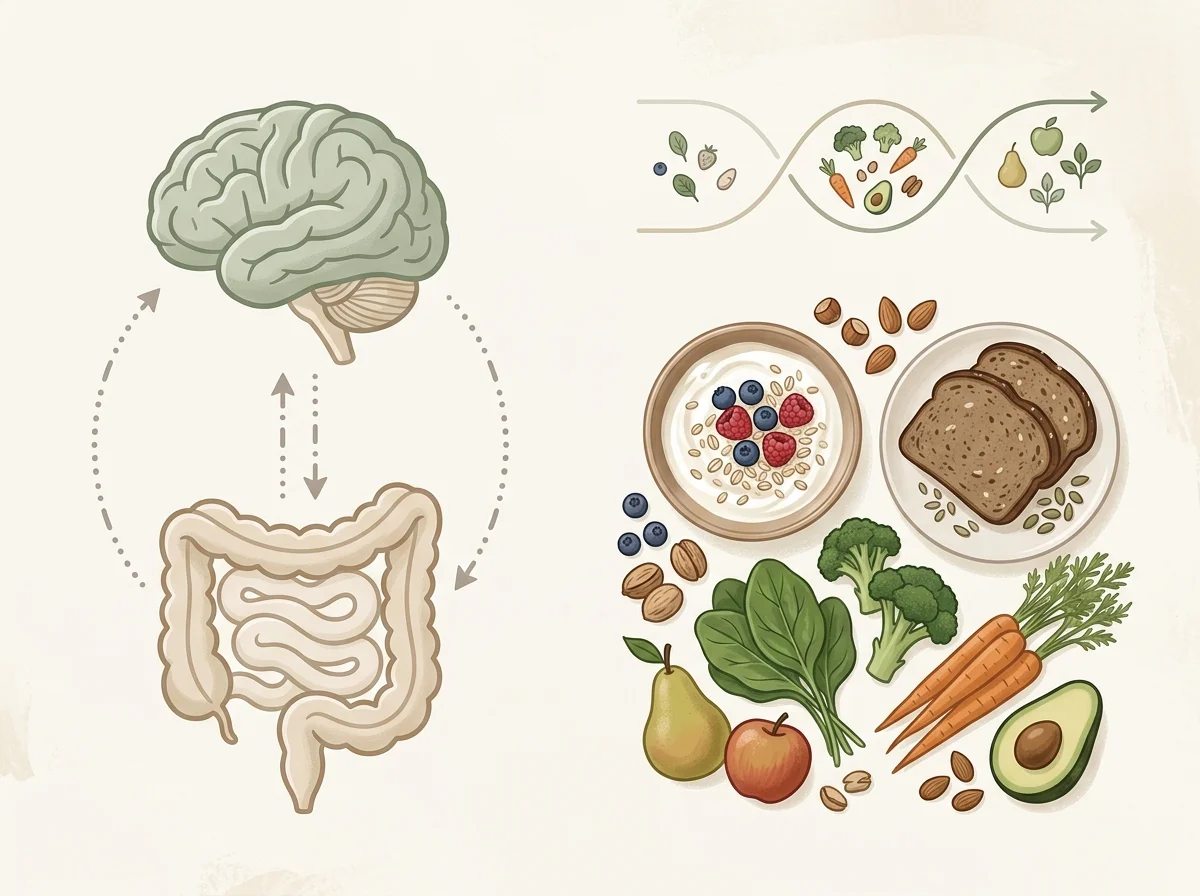
Bloating after meals, anxiety about reaching a toilet or constipation lasting for days can affect not only digestion but also social life and a person's relationship with food. The first question is often, “Which food should I cut out?” A more useful starting point is to assess the cause of the symptoms and choose an appropriate approach without creating unnecessary restrictions.
In irritable bowel syndrome (IBS), dietary changes can provide meaningful relief for some people. However, a single “IBS meal plan,” the same probiotic for everyone or a lifelong strict low-FODMAP diet is not a scientifically defensible solution. Nutrition should be considered alongside diagnosis, bowel pattern, individual tolerance, psychosocial factors and other treatments when needed. [1] [3] [4]
This article is a general guide for adults. Restrictions studied in adults should not be applied directly to children, pregnant people or those with significant weight loss or a risk of undernutrition.
1. What is irritable bowel syndrome — and what is it not?
IBS is classified as a disorder of gut–brain interaction. Abdominal pain or discomfort, symptoms associated with bowel movements and changes in stool frequency or form can occur together. Constipation-predominant, diarrhea-predominant and mixed patterns create different needs. Bloating is common, but bloating alone does not establish an IBS diagnosis. [1] [2]
IBS is not the same as inflammatory bowel disease. Both “IBS is entirely psychological” and “there must be structural damage in the bowel” are misleading explanations. Symptoms can be real even when routine investigations do not show obvious structural damage. Normal findings should not be used to dismiss the person's experience. [1] [6]
Diagnostic frameworks evolve: the Rome V classification of bowel disorders was published in 2026. The use of Rome III or IV in an older trial describes that trial's methods; this article does not present those criteria as a current self-diagnostic test. Diagnosis requires medical assessment. [2]
2. Which symptoms should not be managed with dietary changes alone?
Blood in the stool, unexplained weight loss, iron-deficiency anemia, persistent diarrhea that wakes someone at night or a substantial new change in bowel habits later in life require evaluation. A family history of colorectal cancer, celiac disease or inflammatory bowel disease should also be reported to the physician. These features do not prove a particular diagnosis on their own; they indicate that symptoms should not automatically be attributed to IBS. [3] [6]
Severe or rapidly worsening abdominal pain, substantial bleeding or black tarry stools, fainting, or persistent vomiting that prevents fluid intake requires urgent medical assessment rather than waiting for a routine dietetic appointment. An existing IBS diagnosis should not be used to explain away new alarm features. [3] [5]
This safety distinction does not reduce the value of nutrition. It helps ensure that dietary treatment is offered to the right person at the right time.
3. Does everyone need the same blood tests, stool tests or endoscopy?
No. IBS does not require an unlimited process of testing until every conceivable alternative has been excluded. A positive diagnostic approach can be based on a suitable symptom pattern, history, examination and selected investigations. Tests depend on diarrhea or constipation patterns, alarm features, age and clinical history. [3] [6]
For example, the ACG guideline discusses celiac serology in patients with suspected IBS and diarrhea symptoms, and tests such as fecal calprotectin in appropriate patients without alarm features to investigate the possibility of inflammatory bowel disease. This does not mean that everybody needs the same extensive commercial test panel. Colonoscopy decisions also depend on age-appropriate screening and individual findings. [3]
When celiac disease is being investigated, starting a gluten-free diet independently before testing can affect the results. A person who is already avoiding gluten should tell their physician and should not independently decide to reintroduce it. [14]
4. How does stress affect the gut — are the symptoms “all in the mind”?
Communication between the gut and brain is bidirectional. Motility, sensitivity to stretching of the intestinal wall and the processing of signals may contribute to symptoms. In some people, even a normal amount of gas or bowel contents can be experienced as more intense pain. Stress can influence symptoms, while symptoms can increase stress and social anxiety. [1] [2]
“Just relax and it will go away” is therefore not adequate advice. Attributing every symptom to a single food can be equally incomplete. Sleep, working conditions, meal timing and fears about symptoms provide context for nutritional assessment; they should not be used to blame the patient.
Scientific recognition of gut–brain interaction does not establish the effectiveness of every holistic practice or PNI claim. Nutrition, psychological support and medication should each be assessed according to their own evidence and the professional competence required to provide them. [3] [6]
5. Why is low FODMAP not always the first step?
An initial assessment can review meal patterns, very large portions, eating quickly, excessive caffeine or alcohol consumption and clearly identified individual triggers. Selecting a few changes that fit daily life, rather than removing everything at once, makes both evaluation and sustainability easier. NICE includes regular meals and individually adjusted eating habits within first-line management. [5]
A 2015 trial randomized 75 adults to a four-week low-FODMAP approach or traditional IBS dietary advice. Symptoms decreased in both groups, without a significant difference between them. This does not show that low FODMAP is ineffective; it shows that less restrictive basic advice can also help some people. [9]
When symptoms persist despite initial changes, more targeted dietary interventions and other treatments can be considered together. The amount of restriction is not a measure of treatment quality.
6. How can a food and symptom diary help?
A short-term record can bring together meal timing, approximate portions, symptom type and severity, bowel movements, sleep and stress. The aim is to identify recurring patterns, not to score every bite. Recording changes in caffeine, medicines and supplements can also make interpretation easier. [4] [8]
Bloating after one meal does not prove an intolerance to one of its ingredients. Portion size, earlier meals and the bowel's condition that day can also matter. Cutting out five food groups at once makes it difficult to identify which change, if any, made a difference.
If recording increases anxiety, leads to skipped meals or becomes constant body checking, the method should be simplified and discussed with a professional. A diary should not become a monitoring tool that increases fear of food. [4]
7. What does FODMAP mean?
FODMAP stands for fermentable oligosaccharides, disaccharides, monosaccharides and polyols. These are short-chain carbohydrates that may be incompletely digested or absorbed. They can increase water in the bowel and gas produced through bacterial fermentation. Sensitivity to intestinal stretching also affects symptom intensity in IBS. This process does not mean that a food is toxic or necessarily damages intestinal tissue. [7] [8]
| FODMAP group | Illustrative food sources | Important distinction |
|---|---|---|
| Fructans | Onion, garlic, some wheat and rye products | Wheat fructans are not the same as gluten, which is a protein. |
| Galacto-oligosaccharides (GOS) | Certain pulses and legumes | Type, processing and serving size matter; all legumes are not forbidden for life. |
| Lactose | Milk and some dairy products | Tolerance differs between individuals and products. |
| Fructose in excess of glucose | Honey and certain fruits | All fruit or all sugars should not be treated as one category. |
| Polyols | Certain fruits; products containing sorbitol or mannitol | A “sugar-free” label does not mean low FODMAP. |
This table is not a prohibition list or a serving-size prescription. Product composition and quantities should be assessed using validated food information. [7]
8. Why do serving size, product and preparation matter?
The name of a food does not explain tolerance by itself. Small and large servings of the same product may create different loads, and some foods contain more than one FODMAP group. Looking at only one ingredient in a mixed meal may therefore be misleading. [7] [8]
Ingredients such as onion or garlic in sauces, inulin and sugar alcohols can be considered during assessment. However, a red mark on an online list does not mean that a food is dangerous for you for life.
The Monash team has reported that retesting can produce different FODMAP findings for some foods. Current food data and individual tolerance should therefore be considered together, rather than treating old screenshots as unchanging laboratory facts. This is also why universal gram limits are not provided here. [21]
9. Who might consider a low-FODMAP diet — and who needs caution?
Low FODMAP may be an option for adults whose IBS diagnosis has been medically assessed, whose symptoms are associated with meals and who can undertake a short, structured trial. The decision should consider dietary variety, existing restrictions, living circumstances and preferences. [4] [8]
An extensive elimination diet may be unsuitable when there is a risk of undernutrition, significant weight loss, food insecurity, an active eating disorder or an already very narrow eating pattern. The AGA specifically identifies groups that require caution with restrictive diets. An alternative approach may be needed instead of further restriction. [4]
An adult IBS protocol should not simply be copied into childhood, pregnancy, serious coexisting illness or situations requiring several therapeutic diets. Starting low FODMAP for every episode of undiagnosed bloating is not recommended.
10. Three phases: temporary reduction, reintroduction and personalization
Phase 1 — A short, planned reduction
The aim is not to eliminate all carbohydrates, but to temporarily reduce selected FODMAP sources, use appropriate alternatives and assess symptoms. Monash generally describes an initial phase of 2–6 weeks; the AGA recommends that restriction last no longer than 4–6 weeks. This does not mean that everyone must remain restricted for six weeks. Duration and review points should be agreed at the outset. [4] [8]
Phase 2 — Structured reintroduction
When symptoms respond, different FODMAP groups and quantities are reassessed through a dietitian-guided plan. The purpose is to distinguish which groups cause problems at which amounts. Symptom recording and recovery between challenges are considered. This is not a method for testing a known or suspected food allergy at home. [8] [12]
Phase 3 — Long-term personalization
Tolerated foods are restored, retaining only the restrictions genuinely needed for symptom control. The goal is the broadest, nutritionally adequate and enjoyable diet possible. Tolerance can be reassessed over time. Continuing the first phase indefinitely is not the same as completing the three-phase approach. [8]
11. How much benefit do studies show?
Research supports the possibility that low FODMAP can reduce overall symptoms, pain or bloating in some adults. However, a study response is not a permanent cure or a guarantee of personal success. The comparison treatment and follow-up duration matter. [3] [11]
| Study | Design and assessment | Appropriate interpretation |
|---|---|---|
| Böhn and colleagues, 2015 | 75 adults randomized; 4 weeks. An IBS-SSS reduction of ≥50 points occurred in 50% with low FODMAP and 46% with traditional advice. | This trial did not demonstrate a significant between-group difference. |
| CARIBS, 2024 | 304 randomized; 294 who started treatment analyzed. At 4 weeks, an IBS-SSS reduction of ≥50 points occurred in 76% with low FODMAP plus traditional advice, 71% with a fiber-optimized low-carbohydrate diet and 58% with optimized medication. | Selected adults, one center and a short comparison; these percentages do not mean the condition completely resolved. |
| Cuffe and colleagues, 2025 | Network meta-analysis of 28 randomized trials, 2,338 participants and different diets. | Low FODMAP had the largest evidence base; most comparisons had low or very low confidence, with moderate confidence for some direct comparisons. |
In this table, ≥50 points does not mean a 50% reduction: it is an absolute change from baseline on the IBS-SSS symptom scale. The CARIBS low-carbohydrate arm should not be equated with medical ketogenic dietary therapy. These findings do not support “stop your medicines” or “low FODMAP for everyone.” [9] [10] [11]
12. Is reintroduction really necessary?
Yes. Short-term relief alone does not establish which foods can be brought back. In a 2024 study, 117 patients with IBS were initially assessed; responders to six weeks of restriction entered a blinded, randomized reintroduction phase. The findings showed that trigger patterns were individual. [12]
Some participants also experienced increased symptoms with the glucose control, illustrating the difficulty of attributing every symptom to the biological effect of a specific FODMAP. This does not make symptoms unreal. Structured observation and reassessment are more informative than one bad day.
The research powders and protocol used in the study are not a home self-testing procedure. The results support personalization rather than indefinite removal of every group. [12]
13. Fiber: “more” is not always “better”
Fiber is not a single substance. Solubility, water-holding capacity and fermentability differ. There is support for soluble fiber such as psyllium/ispaghula in IBS, while insoluble fiber such as wheat bran may worsen pain and bloating in some people. This distinction does not mean removing all vegetables and whole grains. [3] [6]
Increasing fiber rapidly may worsen symptoms. Gradual adjustment can be considered according to baseline intake, stool pattern, fluid status and tolerance. Products labeled “prebiotic” that contain inulin or fructans may also exacerbate symptoms in some individuals. [6] [7]
Restricting all fiber sources while trying to relieve constipation, or relying only on low-FODMAP packaged products, can reduce diet quality. Supplement choice and quantity should therefore be based on individual assessment rather than a universal online dose.
14. Does gluten always need to be removed?
No. Celiac disease, wheat allergy and IBS are different conditions. Symptoms after a wheat-containing meal do not establish that gluten is the cause; wheat fructans may also be relevant. [13] [14]
A blinded crossover study published in 2018 included 59 people with self-reported gluten sensitivity in whom celiac disease had been excluded. At group level, symptoms were greater with fructans than with gluten, while no significant difference was found between gluten and placebo. This does not invalidate all gluten-related complaints and cannot be generalized to every person with IBS. [13]
Removing gluten before celiac investigation can reduce diagnostic accuracy. The strict lifelong gluten-free diet required for celiac disease is different from a controlled tolerance assessment in IBS. “Gluten-free” does not mean “low FODMAP” or “healthier for everyone.” [4] [14]
15. Dairy products, lactose and plant-based alternatives
Lactose is a sugar; the mechanism differs from an allergy to milk protein. Not everybody with lactose-related symptoms needs to avoid all dairy completely. Amount, meal context and a product's lactose content can influence tolerance; lactose-free products may be suitable alternatives. [15]
Cheese, yogurt and milk do not contain identical amounts of lactose and should not automatically be grouped together as forbidden foods. If dairy is reduced, calcium intake and overall nutritional adequacy require attention. Protein and calcium contents of plant-based drinks differ between products; they are not all nutritional equivalents of milk. [7] [15]
Lactose-free milk must not be presented as a safe solution for milk-protein allergy. Where an allergy is known, foods should not be reintroduced at home as part of a low-FODMAP tolerance challenge.
16. Do diarrhea-predominant and constipation-predominant IBS need the same plan?
No. In constipation-predominant patterns, adequate fluids, appropriate fiber and difficulties with defecation need consideration. In diarrhea-predominant patterns, urgency, stool frequency, caffeine and certain polyols may carry different importance. Needs may also change over time in mixed IBS. [3] [5]
Even when low FODMAP helps pain or bloating, it may not resolve every bowel-habit problem on its own. In the 2025 network meta-analysis, bowel-habit outcomes did not show the same consistently favorable pattern as global symptoms. Medical assessment or medication needed for constipation should not be postponed to make the diet “succeed.” [11]
Sharing an IBS label does not mean that everyone needs the same fiber amount, calorie intake or exclusion list.
17. Is a probiotic essential?
Probiotics should not be treated as one interchangeable product: strains, combinations, doses, duration and studied populations differ. The AGA's 2020 guideline limits their use in symptomatic IBS to a clinical-trial context; NICE advises people who choose to try one to monitor a particular product for at least four weeks. This difference between guidelines should not be hidden. [17] [5]
Neither “every probiotic works” nor “none can ever help” follows from this evidence. A specific product requires a defined goal, trial duration, consideration of cost and evaluation of response. Starting several supplements simultaneously can make it unclear which, if any, had an effect.
An increase in certain stool bacteria in a study does not prove a corresponding improvement in symptoms or quality of life. A microbiota measurement and clinical benefit are different outcomes. [16]
18. Can a microbiota test identify the right IBS diet?
Microbiome research is valuable, but deriving a validated, single “ideal IBS diet” for everyone from a commercial stool report goes beyond current evidence. The 2025 international consensus highlights limitations in methods, reporting and demonstrated clinical usefulness. [18]
Some bacterial abundances can change during a low-FODMAP diet. For example, a 2017 factorial study involving 104 participants found reduced Bifidobacterium abundance, but no effect on measured overall microbiota diversity. This does not justify saying that the diet “completely damages the microbiota.” Its longer-term clinical significance requires separate evaluation. [16]
The goal is not a “perfect microbiota score,” but a varied, adequate diet that also considers tolerance. The broader limitations of testing are discussed in the guide to personalized nutrition, genetics and microbiota assessment.
19. Where do gut-directed psychological treatments fit?
Cognitive behavioral therapy or gut-directed hypnotherapy can form part of care for appropriate patients. Referral does not mean that the condition is imaginary. In ACTIB, 558 adults with ongoing symptoms despite treatment were studied; therapist-supported telephone and web-based cognitive behavioral approaches improved symptom and functional outcomes at 12 months compared with usual care. [3] [19]
Conversely, a 2026 digital trial that randomized 642 people found no additional benefit on the primary three-month outcome from adding cognitive behavioral or FODMAP modules to general education. Module completion was low and there was loss to follow-up. The result does not invalidate all psychological treatments or diets; delivery, support and engagement matter. [20]
Psychotherapy is delivered by appropriately qualified professionals. A dietitian does not automatically provide that service; collaboration with other clinicians is arranged when needed.
20. Making a dietary plan work in daily life
A plan needs to fit not only laboratory findings and symptoms, but also working hours, budget, cooking facilities, cultural preferences and eating outside the home. A 2022 randomized trial in non-constipated IBS compared traditional advice, low FODMAP and gluten-free diets. It found no significant difference in the primary response between groups, while traditional advice was more favorable in cost and convenience. [22]
Practical planning may include reducing skipped meals, choosing meals with understandable ingredients and considering sauces or additions separately. However, when choosing alternatives, energy, protein, fiber and micronutrient adequacy must be protected as well as considering FODMAP content. [4] [7]
Expanding the options a person can actually eat is more meaningful than giving everyone an identical shopping list. This is what personalized nutrition means in this setting.
21. What should follow-up assess — and what happens if symptoms do not improve?
Follow-up should not focus solely on whether gas has decreased. Pain, bloating, stool urgency and form, participation in work and social life, dietary variety, unintended weight change and anxiety around eating should be reviewed together. Agreeing on goals and a reassessment point at the beginning is useful. [4] [6]
If a planned trial does not provide meaningful benefit, increasing restriction indefinitely is not appropriate. Implementation, nutritional adequacy, diagnosis and other treatment options should be reassessed with the physician and dietitian. Lack of response does not mean that the person lacks willpower. [4]
When relief is achieved, the next goal is not more prohibitions but restoring tolerated foods and making improvement sustainable. [8]
22. Frequently asked questions
Is low FODMAP a weight-loss diet?
No. Its purpose is to assess and manage symptoms in selected people with IBS. Weight loss is not the objective, and unintended weight loss warrants separate assessment. [4]
Is low FODMAP the same as a ketogenic diet?
No. It targets certain fermentable carbohydrates and does not require ketosis. The two dietary arms in CARIBS were not the same protocol either. [8] [10]
If I feel better during the first phase, should I keep eating that way forever?
No. A response should lead to planned reintroduction and personalization, not indefinite continuation of the initial restrictive phase. [4] [8]
Are symptoms that worsen with stress unreal?
They are real. Gut–brain interaction can affect symptoms, but this does not remove the need for appropriate medical assessment. [1] [19]
Can one food test identify all my triggers?
There is no validated routine test that supplies the right IBS diet for everyone without dietary history and clinical assessment. The limitations of microbiota tests and predictive biomarkers must be respected. [4] [18]
23. A dietetic perspective from Doğa Akçayöz, MSc
When considering a nutrition plan, I value focusing not only on which foods to remove, but also on what the person can eat, how nutritional adequacy can be maintained and how everyday life can remain manageable. A long list of prohibitions is not, by itself, a better plan.
For a person whose IBS diagnosis has been medically assessed, symptoms, bowel pattern, existing restrictions, nutritional adequacy and living circumstances should be considered together. When low FODMAP is appropriate, reintroduction and long-term personalization deserve as much attention as the starting phase.
This perspective is not a promise of a cure. My aim is to advocate an approach that connects scientific evidence with individual needs and, where necessary, is delivered in collaboration with physicians and other professionals.
24. Conclusion: better personalization, not more prohibitions
Nutrition therapy for IBS should be built on appropriate assessment, measurable goals and tolerance reviewed over time. Low FODMAP is one evidence-supported option, but it is not suitable for everyone, sufficient on its own in every case or intended as a permanent elimination list. [3] [4] [11]
A good outcome should mean not only fewer symptoms but also adequate nutrition and greater freedom in everyday life. Avoiding unnecessary restriction, taking alarm features seriously and restoring tolerated foods are central to this approach.
Scientific and Institutional References
- National Institute of Diabetes and Digestive and Kidney Diseases (NIDDK) Symptoms & Causes of Irritable Bowel Syndrome NIDDK. 2017;None. Source link ↗
- Corsetti M, Shin A, Lacy BE, Cash BD, Simrén M, Schmulson MJ, Hou X, Lembo A Bowel Disorders Gastroenterology. 2026;170(6):1261–1282. PubMed ↗ DOI: 10.1053/j.gastro.2026.02.003 ↗
- Lacy BE, Pimentel M, Brenner DM, Chey WD, Keefer LA, Long MD, Moshiree B ACG Clinical Guideline: Management of Irritable Bowel Syndrome American Journal of Gastroenterology. 2021;116(1):17–44. PubMed ↗ DOI: 10.14309/ajg.0000000000001036 ↗
- Chey WD, Hashash JG, Manning L, Chang L AGA Clinical Practice Update on the Role of Diet in Irritable Bowel Syndrome: Expert Review Gastroenterology. 2022;162(6):1737–1745.e5. PubMed ↗ DOI: 10.1053/j.gastro.2021.12.248 ↗
- National Institute for Health and Care Excellence (NICE) Irritable bowel syndrome in adults: diagnosis and management (CG61) — Recommendations NICE guideline CG61. 2008;None. Source link ↗
- Vasant DH, Paine PA, Black CJ, et al. British Society of Gastroenterology guidelines on the management of irritable bowel syndrome Gut. 2021;70(7):1214–1240. PubMed ↗ DOI: 10.1136/gutjnl-2021-324598 ↗
- Monash University FODMAP High and low FODMAP foods Monash University. Source link ↗
- Monash University FODMAP Starting the Low FODMAP Diet Monash University. Source link ↗
- Böhn L, Störsrud S, Liljebo T, Collin L, Lindfors P, Törnblom H, Simrén M Diet low in FODMAPs reduces symptoms of irritable bowel syndrome as well as traditional dietary advice: a randomized controlled trial Gastroenterology. 2015;149(6):1399–1407.e2. PubMed ↗ DOI: 10.1053/j.gastro.2015.07.054 ↗
- Nybacka S, Törnblom H, Josefsson A, Hreinsson JP, Böhn L, Frändemark Å, Weznaver C, Störsrud S, Simrén M A low FODMAP diet plus traditional dietary advice versus a low-carbohydrate diet versus pharmacological treatment in irritable bowel syndrome (CARIBS): a single-centre, single-blind, randomised controlled trial The Lancet Gastroenterology & Hepatology. 2024;9(6):507–520. PubMed ↗ DOI: 10.1016/S2468-1253(24)00045-1 ↗ Related correction ↗
- Cuffe MS, Staudacher HM, Aziz I, Coss Adame E, Krieger-Grubel C, Madrid AM, Ohlsson B, Black CJ, Ford AC Efficacy of dietary interventions in irritable bowel syndrome: a systematic review and network meta-analysis The Lancet Gastroenterology & Hepatology. 2025;10(6):520–536. PubMed ↗ DOI: 10.1016/S2468-1253(25)00054-8 ↗
- Van den Houte K, Colomier E, Routhiaux K, et al. Efficacy and Findings of a Blinded Randomized Reintroduction Phase for the Low FODMAP Diet in Irritable Bowel Syndrome Gastroenterology. 2024;167(2):333–342. PubMed ↗ DOI: 10.1053/j.gastro.2024.02.008 ↗
- Skodje GI, Sarna VK, Minelle IH, Rolfsen KL, Muir JG, Gibson PR, Veierød MB, Henriksen C, Lundin KEA Fructan, Rather Than Gluten, Induces Symptoms in Patients With Self-Reported Non-Celiac Gluten Sensitivity Gastroenterology. 2018;154(3):529–539.e2. PubMed ↗ DOI: 10.1053/j.gastro.2017.10.040 ↗
- National Institute of Diabetes and Digestive and Kidney Diseases (NIDDK) Eating, Diet, & Nutrition for Celiac Disease NIDDK. 2020;None. Source link ↗
- National Institute of Diabetes and Digestive and Kidney Diseases (NIDDK) Eating, Diet, & Nutrition for Lactose Intolerance NIDDK. 2018;None. Source link ↗
- Staudacher HM, Lomer MCE, Farquharson FM, et al. A Diet Low in FODMAPs Reduces Symptoms in Patients With Irritable Bowel Syndrome and A Probiotic Restores Bifidobacterium Species: A Randomized Controlled Trial Gastroenterology. 2017;153(4):936–947. PubMed ↗ DOI: 10.1053/j.gastro.2017.06.010 ↗
- Su GL, Ko CW, Bercik P, Falck-Ytter Y, Sultan S, Weizman AV, Morgan RL AGA Clinical Practice Guidelines on the Role of Probiotics in the Management of Gastrointestinal Disorders Gastroenterology. 2020;159(2):697–705. PubMed ↗ DOI: 10.1053/j.gastro.2020.05.059 ↗
- Porcari S, Mullish BH, Asnicar F, et al. International consensus statement on microbiome testing in clinical practice The Lancet Gastroenterology & Hepatology. 2025;10(2):154–167. PubMed ↗ DOI: 10.1016/S2468-1253(24)00311-X ↗
- Everitt H, Landau S, Little P, et al. Therapist telephone-delivered CBT and web-based CBT compared with treatment as usual in refractory irritable bowel syndrome: the ACTIB three-arm RCT Health Technology Assessment. 2019;23(17):1–154. PubMed ↗ DOI: 10.3310/hta23170 ↗
- Thuen C, Kenter RMF, Assmus J, Steinsvik EK, Vikøren LAS, Lied GA, Berentsen B Internet-delivered cognitive behavioral therapy and FODMAP diet for adults with irritable bowel syndrome: A four-arm randomized controlled trial Internet Interventions. 2026;44:100949. PubMed ↗ DOI: 10.1016/j.invent.2026.100949 ↗
- Monash University FODMAP Reintroduction Update Monash University. 2025;None. Source link ↗
- Rej A, Sanders DS, Shaw CC, Buckle R, Trott N, Agrawal A, Aziz I Efficacy and Acceptability of Dietary Therapies in Non-Constipated Irritable Bowel Syndrome: A Randomized Trial of Traditional Dietary Advice, the Low FODMAP Diet, and the Gluten-Free Diet Clinical Gastroenterology and Hepatology. 2022;20(12):2876–2887.e15. PubMed ↗ DOI: 10.1016/j.cgh.2022.02.045 ↗
Related Articles


Learn About Personalized Nutrition Support
Find out about an individualized nutrition consultation that considers digestive symptoms and eating habits alongside appropriate medical assessment.